Skip to content
FORGENO ADS GAMESUnlock all $8

For teachers, homeschoolers and parents

Ad-free brain breaks and free lessons

Short games for the minutes between lessons, and real courses in languages, coding, online safety and more. No ads, no sign-up and no chat with strangers.

At a glance

Why no ads matters in a classroom

Ads on free game sites are built to grab attention, which is the opposite of what a brain break is for. Here there is nothing to skip and nothing to close.

Free lessons

Every lesson is free: no ads, no lives and no paywall. Progress stays in the browser, so each learner can pick up where they left off on the same device.

LanguagesBeginner courses in 11 languages, ten units each, with grammar tips, practice and review of hard words. New writing systems are taught from the first letter, with romanization. Listening uses the browser’s own voice, and no microphone is needed.
Kids Math with Byte (ages 4 to 8)Children teach Byte, a little robot that makes the mistakes young children really make, then catch each mistake, fix it and explain why. 8 units and 26 short sessions on counting to 20, more and less, adding and taking away within 20, tens and ones, shapes and patterns, measuring and US coins. Everything is read aloud for pre-readers, and Byte’s mistakes come from the child’s own earlier ones. A grown-ups page shows what was learned, the Common Core standards covered and a before-and-after check. Byte is a scripted character, not an AI chatbot, and nothing leaves the device.Open the course Kids Reading with Byte (ages 4 to 8)Children teach Byte the robot to read, then catch its mistakes, fix them and explain why: b for d, guessing from the first letter, skipping the vowel, counting letters instead of sounds, reading was as saw and saying the silent e. 8 units and 29 short sessions on rhymes and syllables, first, middle and last sounds, letter names and sounds, sounding out and spelling short words, sh, ch, th and blends, magic e, sight words, capitals and end marks, and short stories with who, what, where and story order. Pre-readers hear every question and picture name; sounds are shown with keyword pictures, never as robot letter sounds. A grown-ups page shows the Common Core reading standards covered and a before-and-after check. Byte is a scripted character, not an AI chatbot, and nothing leaves the device.Open the course Kids Life Skills with Byte (ages 4 to 8)Children teach Byte everyday life skills, catch its mistakes and explain why. 8 units and 30 short sessions: telling time (o’clock, half past, five minutes, a day’s schedule), days, months, yesterday and tomorrow, needs and wants, saving, budgeting and change, naming feelings, calming down, taking turns and saying sorry, handwashing, toothbrushing, sleep and balanced plates, home and fire safety, calling 911, crossing the street and safe grown-ups, following directions and routines, and helping at home. Health and safety facts follow CDC, AAP, USFA and NFPA, NHTSA and NCMEC guidance, and safety is taught as what to do, not stranger danger. A grown-ups page shows the evidence, the standards covered (Common Core time and money, National Health Education Standards, CASEL and the national personal finance standards) and a before-and-after check. Byte is a scripted character, not an AI chatbot, and nothing leaves the device.Open the course Kids Social Studies with Byte (ages 4 to 8)Children teach Byte about people, places and the past, then catch its mistakes, fix them and explain why: reading a red road on a map as a red road, calling the top of every map north, picking the taller person as the older one, thinking shops get their goods for free or that only men can be firefighters. 8 units and 29 short sessions on rules, laws and fairness, voting, community helpers and leaders, needs and wants, goods, services and producers, choices, trading, coins and saving, maps, map keys and the compass rose, the globe, land and water, continents and oceans, weather and ways of life, past, present and future, timelines, then and now, families, traditions, U.S. symbols and holidays. Every mistake Byte acts out has a checked source, all but one from research on children. The course is neutral (no parties and no current politicians) and never asks for a name, address or school. A grown-ups page shows the sources, the C3 Framework and California History–Social Science standards covered and a before-and-after check. Byte is a scripted character, not an AI chatbot, and nothing leaves the device.Open the course Kids Science with Byte (ages 4 to 8)Children teach Byte the robot science, catch its mistakes and explain why. 8 units and 30 short sessions covering all 30 kindergarten to grade 2 NGSS physical, life, and earth and space science expectations: pushes and pulls, fair tests, living things and their needs, weather and storm safety, light and sound, parts, babies and seeds, sky patterns, materials and changes, and land and water. Byte acts out 72 documented misconceptions, each with its research source. No heat, sharp tools or chemicals; nothing leaves the device.Open the course Grade 3 Math with Byte (third grade)Students teach Byte, a robot that makes the mistakes third graders really make, then find the step where it went wrong, fix it and explain why. 9 units and 37 short lessons covering all of Common Core Grade 3 math: multiplication and division as equal groups, arrays and fair shares, properties and facts within 100, two-step word problems and estimating, rounding, adding and subtracting within 1,000, multiplying by multiples of 10, fractions as equal parts and on the number line, equivalent and comparing fractions, time to the minute and elapsed time, grams, kilograms and liters, picture and bar graphs, line plots, area, perimeter and quadrilaterals. Number answers are typed, and every question can be read aloud. Each of Byte’s 54 mistake types comes from published research or state standards guidance, cited on the grown-ups page with the standards covered and a before-and-after check. Find it and the courses planned for every grade on the K–12 Learning hub. Byte is a scripted character, not an AI chatbot, and nothing leaves the device.Open the course Reading & Writing 3–5 with Byte (grades 3 to 5)Students teach Byte, a robot that makes the reading and writing mistakes students in grades 3 to 5 really make, then catch each mistake, fix it and explain why. 9 units and 36 short lessons on Common Core reading, writing and language: syllables, prefixes, suffixes, Greek and Latin roots and context clues; theme versus topic and plot, summaries, character traits, motives and change, narrators and point of view, similes, metaphors, personification and idioms, comparing stories; main idea, evidence, text structure, text features, author’s purpose, fact and opinion, and firsthand and secondhand accounts; opinion, informative and narrative writing, linking words and revising; sentences, fragments and run-ons, agreement, verb tenses, pronouns, capitals, commas, quotation marks, apostrophes and its, their and your. Every story and article was written for the course and can be read aloud. Each of Byte’s 69 mistake types is backed by a cited source (research studies, university writing guides, the Common Core’s own list of skills that need extra attention, and one children’s author’s blog), listed on the grown-ups page with the standards covered and a before-and-after check. Byte is a scripted character, not an AI chatbot, and nothing leaves the device.Open the course Grade 4 Math with Byte (fourth grade)Students teach Byte, a robot that makes the mistakes fourth graders really make, then find the step where it went wrong, fix it and explain why: thinking 0.25 is more than 0.3, judging an angle by the length of its sides, ignoring a remainder that needs one more van, multiplying only tens by tens and ones by ones, adding the bottoms of fractions or calling every odd number prime. 8 units and 34 short lessons covering all of Common Core Grade 4 math: place value to a million, rounding, adding and subtracting with the standard algorithm, times as many, multiplying up to four digits by one digit and two digits by two digits with area models, dividing with remainders, factors, primes and patterns, equivalent and compared fractions, adding fractions and mixed numbers, a fraction times a whole number, tenths, hundredths and decimals, unit conversions, area and perimeter, line plots in eighths, angles, protractors, lines, shapes and symmetry. Its 64 mistake types each cite a checked source: research papers and Florida’s official Grade 4 instructional guide. Number and fraction answers are typed; a grown-ups page shows the standards covered and a before-and-after check. Byte is a scripted character, not an AI chatbot, and nothing leaves the device.Open the course Grade 5 Math with Byte (fifth grade)Students teach Byte, a robot that makes fifth graders’ real mistakes, then fix it and explain why. 8 units and 36 short lessons on all of Common Core Grade 5: expressions, decimals, multi-digit operations, fractions, volume and the coordinate plane. Byte’s 53 mistake types cite research or official guidance.Open the course Science 3–5 with Byte (grades 3 to 5)Students teach Byte, a robot that makes the science mistakes children really make, then fix it and explain why: heavy things fall faster, plants eat soil, summer comes when Earth is closer to the sun, dissolved sugar weighs nothing, magnets pull every metal, gravity needs air, decomposers are only germs, lightning never strikes twice. 9 units and 38 short lessons covering every NGSS performance expectation for grades 3, 4 and 5 plus 3–5 engineering design: balanced forces, motion patterns, magnets and static, life cycles, inherited and environmental traits, animal groups, fossils, variation and survival, habitats, weather graphs and climates, weather hazards, speed, energy transfer and devices, fair tests, waves and codes, light and vision, plant and animal structures, senses, rock layers, weathering and erosion, maps of Earth’s features, energy resources, natural hazards, particles, conservation of weight, properties, new substances, gravity, plants growing from air and water, food webs and decomposers, the sun as a star, day, night and shadows, Earth’s spheres and water, and protecting Earth. Graph and weight answers are typed, and every question can be read aloud. Each of Byte’s 52 mistake types is cited to published research or official safety guidance on the grown-ups page, with the standards covered and a before-and-after check. Byte is a scripted character, not an AI chatbot, and nothing leaves the device.Open the course Social Studies 3–5 with Byte (grades 3 to 5)Students teach Byte, a robot that makes the mistakes children (and many adults) really make, then find where it went wrong, fix it and explain why. 9 units and 32 short lessons covering civics, economics, geography and history for grades 3 to 5: local, state, tribal and national government, the three branches and checks and balances, how laws are made, the Constitution and the Bill of Rights, rights and responsibilities, voting, scarcity and opportunity cost, supply and demand, producers and trade, money, banks and interest, budgets, taxes, latitude and longitude, map scale, physical and political maps, regions, people and environments, migration, Native nations, exploration, the thirteen colonies, primary and secondary sources, the American Revolution, timelines, westward expansion and immigration. History is told honestly, including the harm done to Native nations and to enslaved people, and the course is strictly non-partisan. Number answers such as miles on a map or years between events are typed. Each of Byte’s 40 mistake types comes from published research, national surveys or teaching guidance, cited on the grown-ups page with the C3 Framework codes (cross-checked with California grade 5) and a before-and-after check. Byte is a scripted character, not an AI chatbot, and nothing leaves the device.Open the course Adult Reading & Writing Basics with Byte (adults and older teens)Adult learners coach Byte, an apprentice that makes the reading and writing mistakes adults really make, then point to where it went wrong, fix it and explain why in their own words. 10 units and 37 short lessons: long words, reading smoothly, vocabulary, main ideas, inference and evidence, everyday reading (job postings, schedules, bills, notices, food and medicine labels), sentences, punctuation, paragraphs and practical writing (forms, emails, a cover letter and a GED-style argument). Aligned to the College and Career Readiness Standards for Adult Education and the GED Reasoning Through Language Arts targets. Everything can be read aloud, with adjustable text size and spacing. A progress page shows the standards covered and a before-and-after check. Byte is a scripted character, not an AI chatbot, and nothing leaves the device.Open the course AI skillsA full course on how AI works and how to use it responsibly: 8 units and 32 lessons on next-word prediction, prompting, checking for made-up answers and bias, honest use at school and work, deepfakes and voice-clone scams, privacy and building tested AI workflows. Five browser labs, unit quizzes, a final project with a rubric and a printable completion certificate. No account; progress stays on the device.Open the course Data analysisA full data-literacy course: 8 units and 32 lessons on tidy tables, spreadsheet formulas, cleaning data, mean versus median, percent change, honest charts, SQL (with a real database that runs in the browser) and correlation versus causation. Every lesson has a worked example and practice; units end in quizzes, and the course ends with a written analysis project and a certificate.Open the course IT support and networkingA full career-readiness course in IT support: 8 units and 32 lessons on computer hardware, a six-step troubleshooting method, malware response, IP addresses, DHCP and DNS, Wi-Fi security, command-line network tools and help-desk communication. Simulators include a ticket desk and a command line with broken laptops to diagnose; it ends with a documented support case and a certificate.Open the course Prompt engineering and AI automationA full career course on making AI do real work reliably: 8 units and 32 lessons on writing and testing prompts, structured JSON output, few-shot examples, prompt chains with checks and human review, evaluating outputs against test cases, and when office tasks should and should not be automated. Five browser labs, unit quizzes, a tested automation project and a certificate.Open the course Machine learning fundamentalsHow machine learning really works, with the math worked step by step: 8 units and 32 lessons on features and labels, fair train and test splits, k-nearest neighbours, linear regression and gradient descent, precision and recall, overfitting, decision trees, bias in data and how neural networks lead to today’s language models. Five labs run real algorithms in the browser.Open the course Building AI-powered appsHow real apps use language models safely: 8 units and 32 lessons on model APIs with keys kept on the server, tokens and cost, rate limits and streaming, system prompts, validating structured output, tool calling, retrieval with embeddings, guardrails against prompt injection, evaluation and privacy. Simulated labs, quizzes, a design-document project and a certificate.Open the course AI data annotation and model ratingA full career course for remote AI data work as an annotator, AI trainer or rater: 8 units and 32 lessons on annotation types, applying long guidelines and escalating edge cases, gold questions and Cohen's kappa by hand, rating and comparing AI responses, fact-checking, safety labelling and wellbeing, confidentiality and spotting job scams. Eight browser labs, unit quizzes, a mini annotation project and a certificate.Open the course Responsible AI and AI safetyA full career course for AI governance, compliance, policy and trust and safety roles: 8 units and 32 lessons on documented AI incidents, sources of bias and fairness metrics worked by hand, privacy and children’s data, model cards and explainability, human oversight, hallucination, prompt injection and AI security, deepfakes and content provenance, the NIST AI RMF, ISO/IEC 42001, the EU AI Act and US rules, risk registers, incident response and AI use policies. Contested policy debates are presented from every side. Eight browser labs, quizzes, a governance-pack project and a certificate.Open the course Python programmingA full career course in Python for junior developer roles, with real Python running in the browser: 8 units and 32 lessons on types, strings, decisions, loops, lists, dictionaries and sets, functions, classes, reading tracebacks, debugging, testing with assert and unittest, the standard library, turning CSV and JSON into summaries, and algorithms. Graded coding exercises with hints, a tracer, a debugging lab, a data lab, a tested final project and a certificate.Open the course CodingHTML, CSS and JavaScript from zero: 48 short lessons in 9 units. Learners run real code in a sealed sandbox, get feedback that names the exact mistake, and finish three projects.Open the course Cybersecurity basicsEveryday online safety, defensive only: passphrases, two-step sign-in and passkeys, spotting phishing and scam calls, safe browsing, backups and what to do after a breach. Practice uses invented companies.Open the course StrategyTen short units on making good decisions: trade-offs, risk, opportunity cost, game theory, negotiation and thinking traps, each tried out in a fictional mission.Open the course Outbreak scienceHow diseases spread and how public health responds: 11 units and 36 short lessons, from germs and R0 to reading outbreak charts and John Snow’s 1854 cholera map. The simulations use made-up towns. For learning, not medical advice.Open the course DrawingStep-by-step guided drawings, such as a sitting cat, a garden flower and a mountain valley, with a finger, mouse or pen. Drawings stay on the device.Open the course

See every course and unit

Brain-break picks

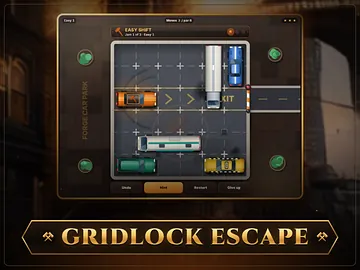
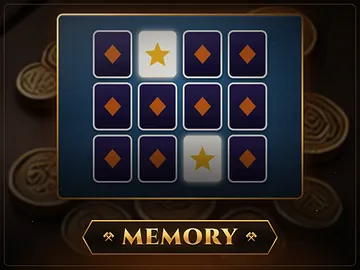
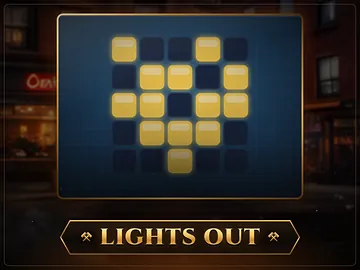
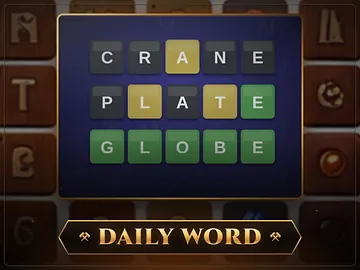
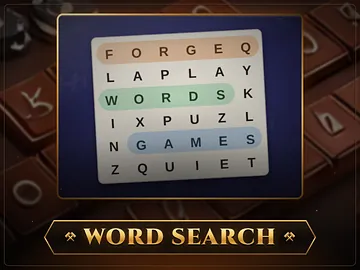
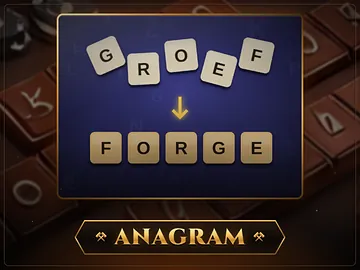
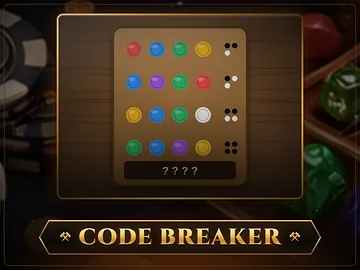
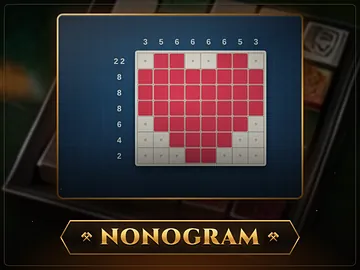
Short games that fit a five-minute break. Several have difficulty settings, so start on easy for a quick round. Each card opens that game’s own page on this site.

Quick puzzles

Short, self-contained rounds that reset attention.
Word games

Spelling and vocabulary practice that feels like a game.
Math and logic

Number sense and step-by-step reasoning.
Calm games

Slow, quiet games for settling a room after a busy lesson.
Today’s game

Want one pick with no decisions to make? The daily page names today’s game. Daily Word, Mini Crossword and Sudoku also have a fresh puzzle every day.

See today’s game

How pricing works

Your first round of every game is free. After that, one $8 payment unlocks all 150 games for life. No ads, ever.

Every lesson is free: no ads, no lives and no paywall.

Questions about using Forge with a class or at home: support@forgenoadsgames.com.

Questions from teachers and parents

Do students need an account or an email address?

No. Games and lessons open straight away, with nothing to sign up for. To run the leaderboards, the site gives a browser an anonymous guest player card when it plays a game round, with no email or real name attached. Adding an email is optional: it only lets a player keep their level, friends and groups on other devices.

What data does the site keep?

Lesson progress, settings and saved game progress stay in the browser on that device, so clearing the browser’s site data removes them. When a game round finishes, the result is also recorded on our server against the anonymous guest card so levels and leaderboards work. To stop that on a device, turn off “Count my games on the leaderboards” on the Leaderboards page. The site also keeps simple counts, such as how often a game starts, with no player ID, email address or tracking cookie. It loads no ad or analytics scripts from other companies. The privacy policy has the details.

Can students chat with other players or strangers?

No. There is no chat or messaging between players anywhere on the site. Leaderboards show a display name, level and results. Players only connect on purpose, by swapping a friend code or a group invite code, and a group’s owner can remove members. Display names allow letters, numbers and a few symbols, and slurs and strong profanity are refused. Games are played solo or against the computer, with one exception: the racing game The Quarter Mile can pair two drivers for a live race when its online mode is on. They see each other’s display name and car, and there is no chat.

Are there ads or in-game purchases?

No to both. Your first round of every game is free. After that, one $8 payment unlocks all 150 games for life. No ads, ever. Nothing is sold inside the games, and casino-style games use free play chips that have no cash value and are never sold. The only other paid item on the site is an optional message refill for the AI chat in some learning rooms, described in the next answer.

How does the AI chat helper work, and how is it kept on topic?

There are two helpers. The help button inside games, Ask Forge, answers from a fixed set of checked game guides and FAQs; it does not send questions to an AI provider, and it will not give away answers to daily puzzles. Some learning rooms also offer an optional chat with Claude, an AI made by Anthropic. Nothing is sent until someone ticks a box and taps Start. Then the typed message and what is on the lesson screen go to the AI to write a reply, and the site does not save the conversation. Its standing instructions tell it to keep replies age-appropriate, stay on the room’s topic, never ask for personal details, avoid medical, legal or money advice, and point anyone who says they are in danger to a trusted adult and emergency help. In Cyber Academy it refuses to help break into accounts or systems. These are automated rules, not a human moderator, and AI can make mistakes, so stay close by with younger students. A few messages a day are free; more come from the unlock’s monthly allowance or a paid refill, and the chat asks anyone under 18 to check with a parent before buying.

Is there a school or bulk price?

No school, district or bulk price is listed. Your first round of every game is free. After that, one $8 payment unlocks all 150 games for life. No ads, ever. Every lesson is free: no ads, no lives and no paywall. The unlock is a personal purchase, saved in the browser you buy it in. For questions about using Forge with a class, email support@forgenoadsgames.com.

Does Forge have a student-privacy certification?

Forge does not claim any student-privacy certification. This page and the privacy policy describe in plain words what happens with data, so you can pass them to whoever approves websites at your school.

Do I need to install anything?

No. The games and lessons run in a web browser on computers, tablets and phones, with nothing to install.

Can I share this page with families or colleagues?

Yes, please do. Bookmark it or send its address, forgenoadsgames.com/teachers.html. Every link on it stays on this site.

Bookmark or share

Send this page to families or colleagues: forgenoadsgames.com/teachers.html